Important points:
- Circle Foundation is also investing in the United Nations Digital Hub’s financial solutions to digitize aid payments through blockchain and stablecoins.
- More than $38 billion in humanitarian funding continues to move through slow legacy systems. Pilots have shown that digital rail can reduce costs by up to 20%.
- Regulated stablecoins like USDC enable faster cross-border transfers, full traceability, and real-time transparency of global aid.
Circle is driving deeper integration between cryptocurrencies and real-world trading activities. This time, the focus is on humanitarian aid. This partnership, announced at Davos, shows that stablecoins are gradually moving beyond their role as trading/trading tools and becoming part of a critical global infrastructure.
Read more: Coinbase brings Bermuda on-chain as nation moves towards first fully digital economy
Circle grants target UN financial bottlenecks
The Circle Foundation awards its first international grant to support the work of the United Nations. Digital Hub for Finance Solutions (DHoTS)a shared platform designed to overhaul the way funds move across UN agencies.
The global humanitarian system handles much more. $38 billion annuallyBut much of that money still flows through correspondent banking networks built decades ago. These rails are slow, costly, and opaque, especially in crisis areas where time and responsibility are paramount.
Circle’s investment will help DhoTS integrate a new generation of financial infrastructure, including managed stablecoins, to simplify cross-border transactions, reduce operational friction, and increase transparency across the UN ecosystem.
of announcement The announcement was made at the World Economic Forum (WEF) annual meeting in Davos, where “crypto-native” tools are gaining more prominence in official policy discussions around the world.
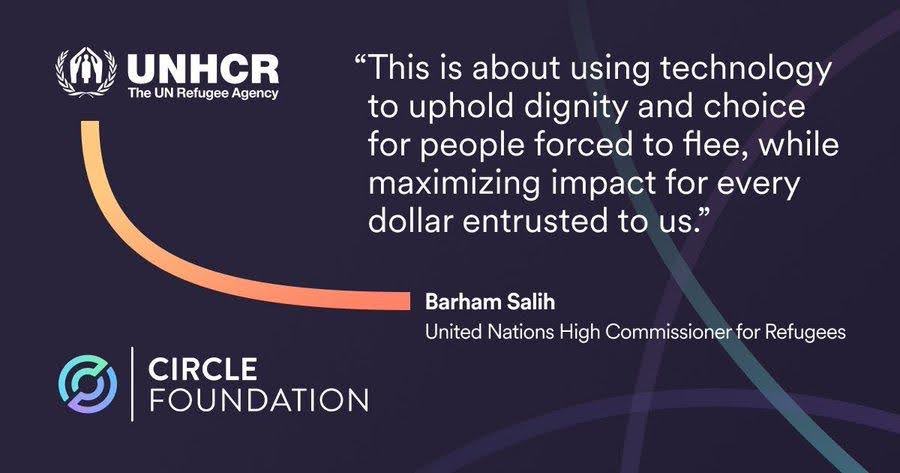
The Circle Foundation supports the United Nations’ efforts to modernize global aid delivery.
The humanitarian aid system moves more than $38 billion each year, but much of that aid still relies on slow and expensive traditional financial rails.
Through its first international grant, the Circle… pic.twitter.com/JwWXdmh55F
— Circle (@circle) January 21, 2026
Read more: Circle secures full ADGM license as UAE opens door to massive stablecoin expansion

How stablecoins will change aid delivery
Central to this effort is the use of blockchain-based payment rails that can instantly transfer value across borders without the need for various intermediaries.
Traditional humanitarian remittances are typically characterized by correspondent bank levels, manual reconciliation, and slow settlement. Every step comes at a cost and visibility. Stablecoins condense the entire process into one traceable transaction.
UNHCR’s blockchain pilot lays the groundwork
The grant builds on previous work by the United Nations Refugee Agency (UNHCR), which has been testing blockchain-based assistance since 2022.
In the case of the Ukraine displacement crisis, UNHCR distributed benefits under the USDC to beneficiaries. These pilots have shown that digital resources can be leveraged responsibly and safely at scale in real-world humanitarian intervention situations.
The results revealed faster delivery times, greater responsibility and less cost than using traditional banking channels. That experience feeds directly into DHoTS, which seeks to standardize such functionality across several UN agencies.
DHoTS has so far been deployed by 15 UN agencies, including UNDP, IOM, WMO, OECD, and ICAO, with technical support from the United Nations International Computing Center.
Regulated stablecoin, not experimental crypto
One of the main things that Circle and UN officials have emphasized is regulation. This program is not based on unstable and unregulated tokens. Rather, it is intended to be a managed stablecoin with built-in compliance, risk management, and auditing.
Circle believes that the financial protection built into stablecoins allows it to meet the high demands of large national institutions while achieving the speed and efficiency associated with cryptocurrencies.
This distinction is important. Regulated stablecoins are increasingly being considered by governments and multilateral organizations as a reasonable addition to current payments infrastructure, rather than a hypothetical experiment.
Transparency becomes the default feature
Visibility is one of the biggest structural problems in global aid. Donors want to see evidence that their funds are going to the right people, and government agencies need more resources to track flows across jurisdictions.
Blockchain-based systems will transform that dynamic. Records are stored in an immutable manner, establishing a common source of truth between agencies, partners, and auditors.
This will reduce reconciliation gaps, streamline reporting and strengthen accountability at scale, in the interest of the United Nations. For donors, that translates into a deeper understanding of how every dollar is spent.