Discover how AI-driven smart contracts are redefining DeFi governance, automation, and on-chain security in 2025—and what this means for the crypto future.
Introduction: The Next Leap in Smart Contract Evolution
For years, smart contracts have been the backbone of decentralized finance (DeFi)—self-executing programs that don’t need human intervention. But here’s the thing: most of them are static. Once deployed, their logic never changes, no matter how markets or user behaviors evolve.
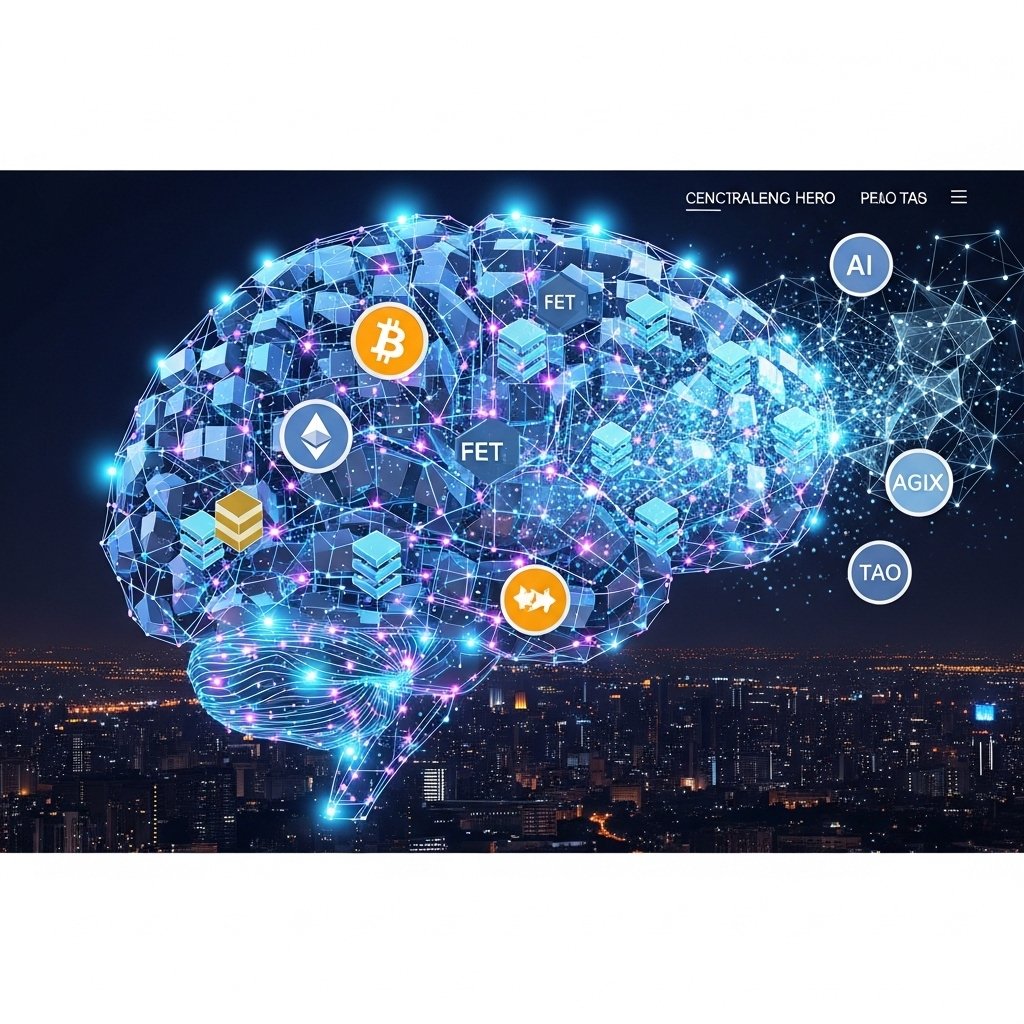
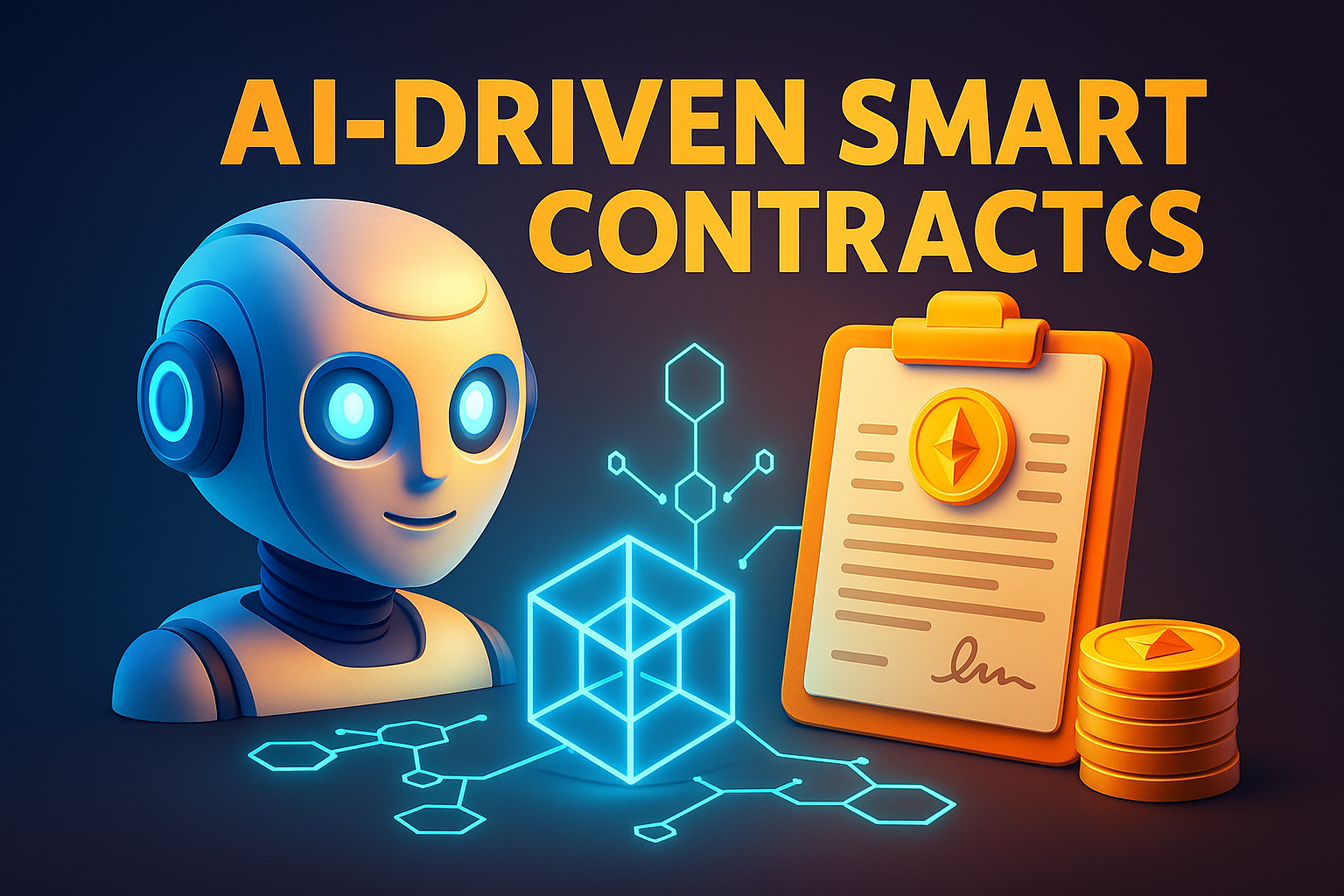
That rigidity is now being challenged by AI-driven smart contracts — self-learning, adaptive systems that use machine learning to analyze on-chain data, detect anomalies, and even adjust parameters autonomously.
In 2025, as blockchain networks merge with artificial intelligence, smart contracts are learning to think for themselves.
( “AI Agents + Crypto: Your Wallet Is About to Think for You — Here’s What That Means (2025–2027)”
The Intelligence Layer: How AI Supercharges Smart Contracts
Traditional smart contracts rely on “if/then” logic — predictable, immutable, but limited. AI injects a dynamic intelligence layer, enabling them to:
- Predict and Prevent Exploits:
AI models can scan thousands of transactions per second, flagging abnormal patterns that might signal a rug pull, front-running, or flash loan attack.
(Internal link idea: “How AI Agents Are Disrupting Crypto Trading — A Deep Dive into 2025’s Hottest Narrative”) - Optimize Governance in DAOs:
Imagine decentralized autonomous organizations (DAOs) that use AI to propose policy changes or forecast the outcomes of votes. Smart contracts can automatically rebalance treasuries or voting weights based on real-time data. - Automate Market Logic:
DeFi lending platforms could dynamically adjust interest rates, collateral ratios, or rewards based on AI-predicted liquidity flows — making protocols more resilient. - Enhance On-Chain Reputation Systems:
AI can assess user credibility through behavioral data, building trust layers for decentralized identity (DID) and credit systems.
Case Study: From Static Code to Adaptive Protocols
Projects like SingularityDAO, Fetch.AI, and Cortex have been early movers in embedding AI into on-chain contracts.
They showcase how autonomous agents can execute tasks like liquidity management or yield optimization without constant developer oversight.
We’re witnessing the emergence of “Living Contracts” — systems that evolve based on context and data.
(“Best AI Trading Bots: Reviewed & Compared,” as it complements this discussion on adaptive automation.)
The Governance Revolution: AI + DAOs
Traditional DAOs rely on human proposals and votes, often leading to slow decision cycles and herd mentality.
Enter AI-assisted governance: algorithms that scan community feedback, market data, and on-chain activity to simulate the outcomes of various decisions before members vote.
This doesn’t replace decentralization — it augments it.
The AI layer acts as an advisory engine, providing insights rather than authority.
Security: Smart Contracts That Defend Themselves
Security remains DeFi’s Achilles’ heel.
Billions of dollars have been lost due to exploitable logic or unpatched vulnerabilities.
AI-driven security models are changing that.
They can:
- Perform continuous vulnerability scanning post-deployment.
- Detect gas anomalies or unusual call sequences that suggest malicious activity.
- Integrate with zero-knowledge (ZK) proof systems to verify code integrity without exposing details.
(“Meet Qwen3-Coder: Alibaba’s Boldest Move Yet in AI Coding – And It’s Open-Source,” )
Challenges: Transparency, Cost, and Legal Boundaries
But we’re not there yet.
AI-enabled contracts introduce new challenges that the industry must confront:
- Transparency: AI decisions are probabilistic — can users verify why a contract acted in a certain way?
- Computation Cost: Running ML models on-chain is expensive; hybrid solutions (off-chain AI with on-chain triggers) are still evolving.
- Legal Accountability: Who’s responsible if an AI contract misbehaves — the developer, the DAO, or the algorithm itself?
These questions will define the legal and ethical contours of the next DeFi cycle.
The Road Ahead: Toward an Autonomous On-Chain Economy
We’re approaching an era where DeFi protocols, wallets, and contracts won’t just execute logic—they’ll reason about it.
The crypto ecosystem is moving from “code is law” to “learning code is law.”
The AI-blockchain symbiosis will create protocols that are:
- Self-auditing (detecting and fixing their vulnerabilities)
- Self-governing (proposing and executing DAO policies)
- Self-optimizing (adapting to user needs and market shifts)
Those who understand both machine intelligence and decentralized architecture will define the future of finance.
Conclusion
The real breakthrough in DeFi isn’t just faster blockchains or higher yields. It’s intelligence — contracts that learn, adapt, and protect themselves.
AI-driven smart contracts are where DeFi stops being static code and becomes living infrastructure.
That’s the evolution every crypto builder should be watching closely in 2025.
Internal Links (for SEO & Retention)
- How AI Agents Are Disrupting Crypto Trading — A Deep Dive into 2025’s Hottest Narrative
- AI Agents + Crypto: Your Wallet Is About to Think for You — Here’s What That Means (2025–2027)
- Best AI Trading Bots: Reviewed & Compared
- Meet Qwen3-Coder: Alibaba’s Boldest Move Yet in AI Coding – And It’s Open-Source