According to the Food and Agriculture Organization, Norway is the world’s largest producer of farmed Atlantic salmon and the largest exporter of seafood products, while the United States remains the largest importer of these products. Two MIT students recently traveled to Trondheim, Norway, to explore cutting-edge technologies being developed and implemented in marine aquaculture.
Beckett Devoe, a senior in artificial intelligence and decision making, and Tony Tang, a third-year mechanical engineering student, collaborated with MIT Sea Grant for the first time through the Undergraduate Research Opportunities Program (UROP). They contributed to a project focused on wave generator design and machine learning applications to analyze the health status of oyster larvae in hatcheries. While nearshore aquaculture is an established industry in Massachusetts and the United States, open-ocean aquaculture is a nascent field here and faces unique and complex challenges.
To better understand this emerging industry, MIT Sea Grant created Aquaculture Shock, a collaborative initiative with funding from the Aquaculture Technology and Educational Travel Grant through the National Sea Grant College Program. In collaboration with the MIT-Scandinavia MISTI (MIT International Science and Technology Initiatives) program, MIT Sea Grant offered Devoe and Tang an aquaculture-related summer internship at SINTEF Ocean, one of Europe’s largest research institutions.
“The opportunity to work on this hands-on aquaculture project under a world-renowned research institution in a region of the world known for marine technology innovation is what MISTI is all about,” says Madeline Smith, managing director of MIT Scandinavia. “Not only are the students gaining valuable experience in their field of research, but they are also developing the cultural understanding and skills to become future global leaders.” Both students worked at SINTEF Ocean’s Aquaculture Robotics and Autonomous Systems Laboratory (ACE-Robotic Lab), a facility designed to develop and test new aquaculture technologies.
“Norway has a unique geography with all these fjords,” says Sveinung Ohrem, Research Manager in the Aquaculture Robotics and Automation Group at SINTEF Ocean. “So we have a lot of protected waters, which makes it ideal for doing aquaculture at sea.” He estimates there are about 1,000 fish farms along the Norwegian coast, and explains some of the tools used in the industry. Robots for inspection and cleaning. Environmental sensors that measure oxygen, temperature, and electrical current. A sounder that sends out acoustic signals to track the location of fish. It also has a camera to help estimate biomass and fine-tune feeding. “Food is a big challenge,” he says. “Feed is by far the biggest cost, so optimizing feed can lead to significant cost reductions.”
During his internship, DeVoe focused on a project that uses AI to optimize fish feed. “I try to look at different characteristics of the farm, such as the size of the fish and the coldness of the water, and use that to give the farmer the optimal feeding rate for the best results, while also saving on feed costs,” he explains. “It was great to learn more about machine learning techniques and be able to make them better on real projects.”
In the same lab, Tan worked on simulating an underwater vehicle manipulator system that uses a robotic arm to move around a farm and repair damage to cage nets. According to Orem, there are currently several thousand aquaculture robots in operation in Norway. “The scale is huge,” he says. “You can’t have 8,000 humans controlling 8,000 robots. That’s not economically or practically viable. So we need to increase the level of autonomy of all these robots.”
The collaboration between MIT and SINTEF Ocean began in 2023 when MIT Sea Grant welcomed Eleni Kelasidi, a visiting scholar in the ACE-Robotic Lab. Kelasidi worked with MIT Sea Grant Director Michael Triantafilou and mechanical engineering professor Themistokris Sapsis to develop controllers, models, and underwater vehicles for aquaculture, while also investigating fish-machine interactions.
“We have had a long and fruitful collaboration with the Norwegian University of Science and Technology (NTNU) and SINTEF, which continues to carry out important initiatives such as the aquaculture project with Dr. Kelasidi,” says Triantafyllou. “Norway is at the forefront of marine aquaculture, and MIT Sea Grant is investing in this area, so we look forward to great results from this collaboration.”
Currently a professor at NTNU, Kelasidi leads a field robotics lab focused on developing resilient robotic systems that operate in highly complex and harsh environments. “Aquaculture is one of the most challenging areas to demonstrate autonomous solutions because everything is moving,” she says. Kelasidi explains that aquaculture is a highly interdisciplinary field and requires more students with both biology and technology backgrounds. “You can’t develop a technology that can be applied to an industry that doesn’t have a biological component and apply it to places where there are live fish and other organisms,” she explains.
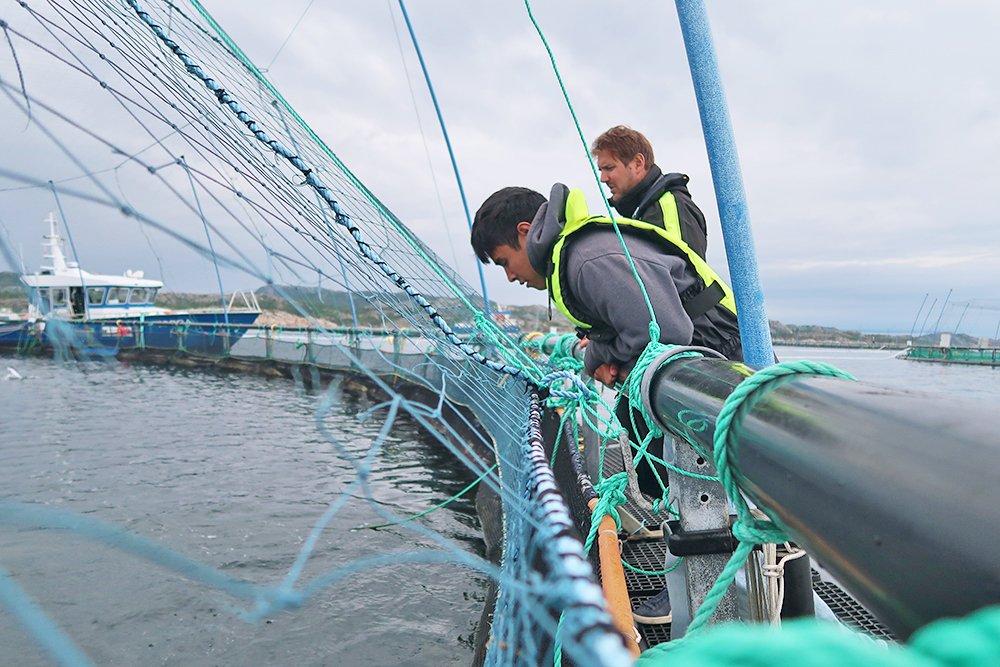
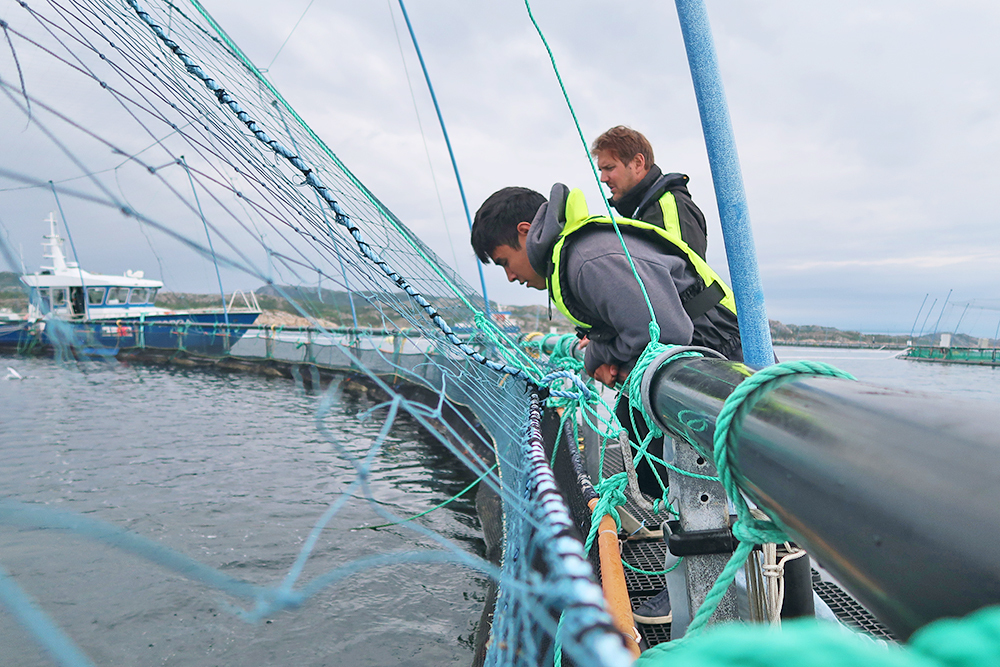
Orem asserts that maintaining fish welfare is a key driver for researchers and companies involved in aquaculture, especially as the aquaculture industry continues to grow. “So the big question is, how can we ensure that?” he says. SINTEF Ocean has four research licenses for fish farming and operates through a collaboration with SalMar, the world’s second largest salmon farmer. The students had the opportunity to visit Singsholmen, one of the industrial-scale farms on the island of Hytra. The farm has 10 large round net pens approximately 50 meters in diameter, each holding up to 200,000 salmon. “We had to physically touch the net to see how the (robotic) arm could modify it,” Tan said.
Kelasidi emphasizes that the information that can be obtained in the field cannot be obtained from an office or laboratory. “That way you get an idea of the scale of the challenge and the scale of the facility,” she says. She also emphasizes the importance of international and institutional collaboration to advance research in this area and develop more resilient robotic systems. “We need to target that problem, and let’s solve it together.”
MIT Sea Grant and the MIT-Scandinavia MISTI program are currently recruiting four new MIT students to intern in Norway this summer at institutions promoting marine aquaculture technology, including NTNU’s Field Robotics Lab in Trondheim. Students interested in autonomy, deep learning, simulation modeling, underwater robotic systems, and other aquaculture-related fields are encouraged to contact Lily Keyes at MIT Sea Grant.