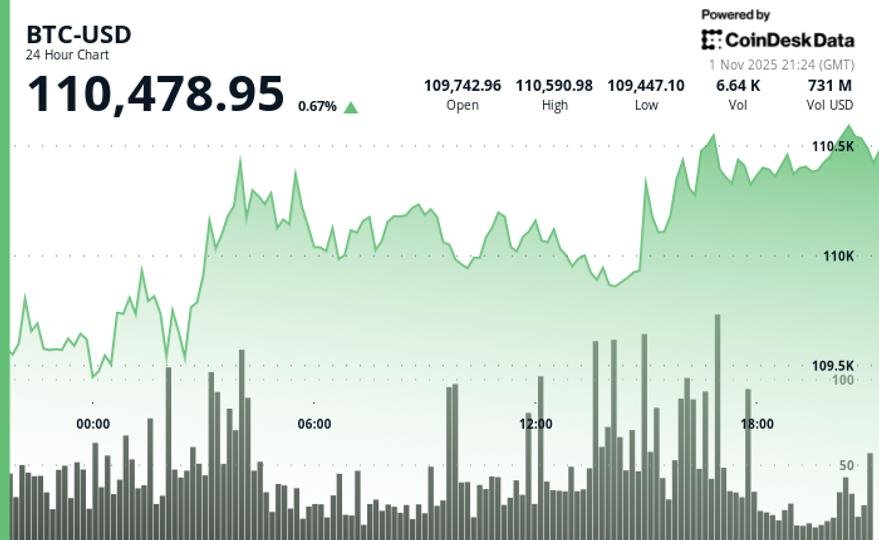
Although November has a big reputation in Bitcoin lore, the typical November is subdued, with the blockbuster average skewed by the 2013 moonshot.
Cryptocurrency influencer Lark Davis called November the “strongest month” for Bitcoin, with an average increase of nearly 42%. CoinGlass’ Bitcoin monthly return heatmap shows that this number is true as an average from 2013 to 2025, but it is not the whole story. The median for November is 8.81%, and the mean is lifted by the 2013 outlier of +449.35%.
It is important to distinguish between mean and median. The median represents a typical November over the cycle. The mean is sensitive to large fluctuations and exceeds the sample in 2013. A look at the November column reveals the dispersion. The losses were significant in 2018 (-36.57%), 2019 (-17.27%), 2021 (-7.11%), and 2022 (-16.23%). There will be solid increases in 2020 (+42.95%) and 2024 (+37.29%), and a moderate trend in 2025 (+0.54%). This spread explains why “November is good on average” is a historical statement rather than a prediction.
What’s the origin of “Uptober” and “Moonvember”? These are community memes that reappear every fall to label the anticipated October gathering and November follow-through. The heat map shows a supportive history in places. The average for October is +19.92% and the median is +14.71%. However, seasonality does not guarantee results in a single year.
How to use this without fooling yourself: combine seasonal statistics with both the mean and median, quote ranges, and avoid working the 42% average back into your price target. In fact, traders will look for confirmation such as breaking firm resistance, widening, and increasing volume before leaning into the calendar effect. If the tape cannot be verified, the transaction should not be posted on the calendar.