

On-chain data shows that Bitcoin mining difficulty will rise sharply in the upcoming correction, reaching a new all-time high (ATH).
Bitcoin mining difficulty will increase by more than 6% in next adjustment
Bitcoin mining difficulty is headed for a positive correction on Wednesday, according to CoinWarz data. “Difficulty” here refers to a metric built into the BTC blockchain that controls how difficult it is for miners to mine blocks on the network.
Difficulty is completely controlled by code written by Satoshi years ago, and no third party has any say in how its values change. The chain automatically adjusts its metrics approximately every two weeks based on simple rules established by the pseudonymous Bitcoin creators. This means that the block time should be constant at approximately 10 minutes per block.
Whenever a miner mines a block with an average time faster than this, the network responds by increasing the difficulty. This jump is always enough to bring the miner’s speed back to standard rate. Similarly, if a validator is unnecessarily slow, it makes life easier for the chain.
The next difficulty adjustment will be made on October 29th. Below are the details of this event.
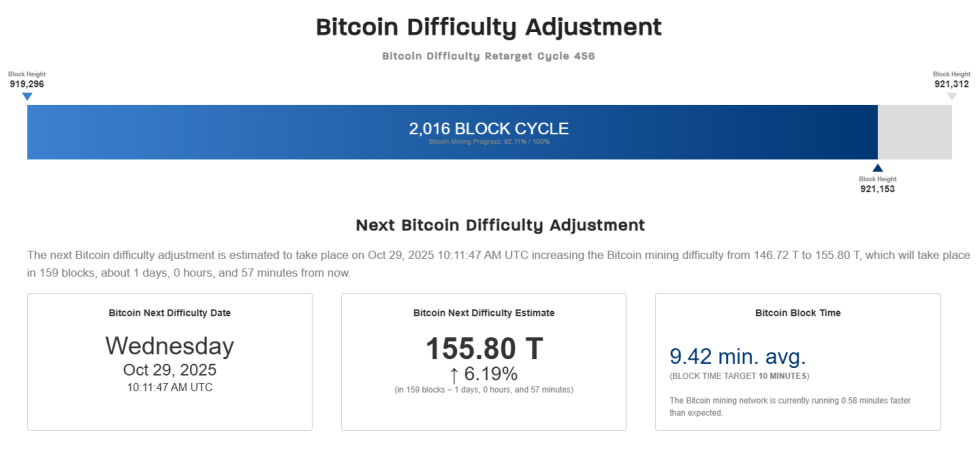
Looks like the miners have been relatively fast recently | Source: CoinWarz
As you can see, the average block time since the last Bitcoin difficulty adjustment was 9.42 minutes, 0.58 minutes faster than standard time. To fix this, the network will increase the difficulty by more than 6% on Wednesday. This is a pretty significant increase and would set a new record for this metric at approximately 155.8 trillion hashes. Currently, the value of the metric is 146.7 trillion hashes.
Before the last adjustment, Bitcoin mining difficulty had been on a continuous upward trend, increasing for seven consecutive corrections.
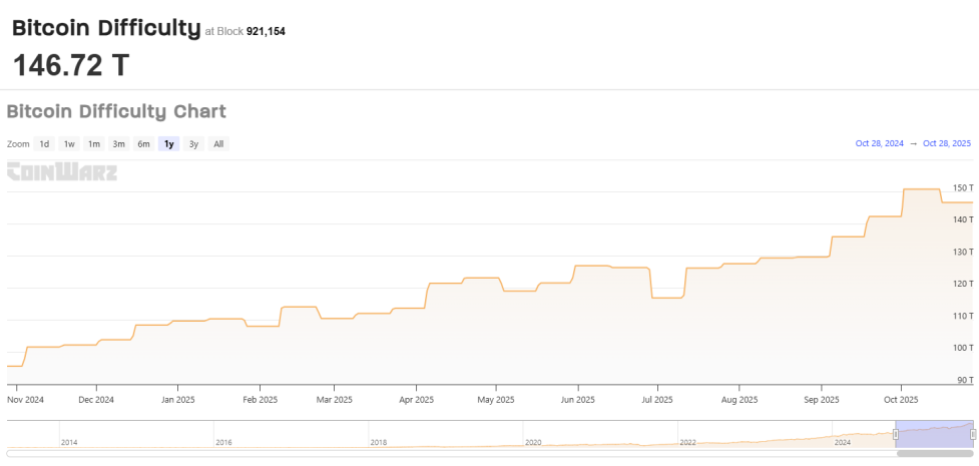
How the Difficulty's value has changed over the past year | Source: CoinWarz
The reason behind the upward trend of this indicator was the aggressive expansion in which miners were participating. As the graph below shows, hashrate, a metric that tracks the total amount of computing power deployed by on-chain validators, has spiked recently.
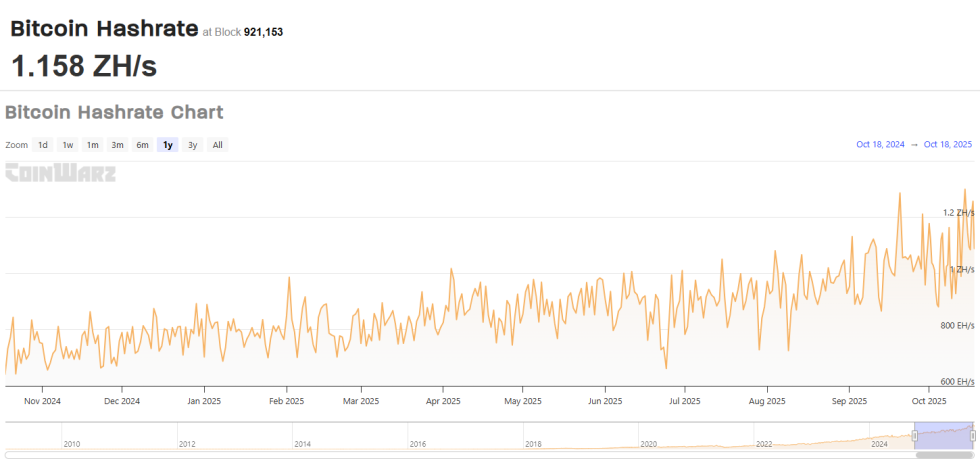
The value of the metric has been exploring new highs | Source: CoinWarz
Around the beginning of October, we saw a drop in the Bitcoin hashrate, suggesting that some miners were disconnected from the network. Due to this decline in computing power, the validators could not keep up with the pace, and the continuous increase in difficulty was interrupted.
But as it turns out, the drop in hashrate was only temporary as miners were once again actively upgrading, forcing the network to yet another new ATH difficulty.
BTC price
Bitcoin rallied above $116,000 on Monday, but has since faced a pullback and is now back at $114,400.
The trend in the price of the coin over the last five days | Source: BTCUSDT on TradingView
Dall-E, featured image from CoinWarz.com, chart from TradingView.com
editing process for bitcoinist is focused on providing thoroughly researched, accurate, and unbiased content. We adhere to strict sourcing standards, and each page is carefully reviewed by our team of top technology experts and experienced editors. This process ensures the integrity, relevance, and value of your content to your readers.