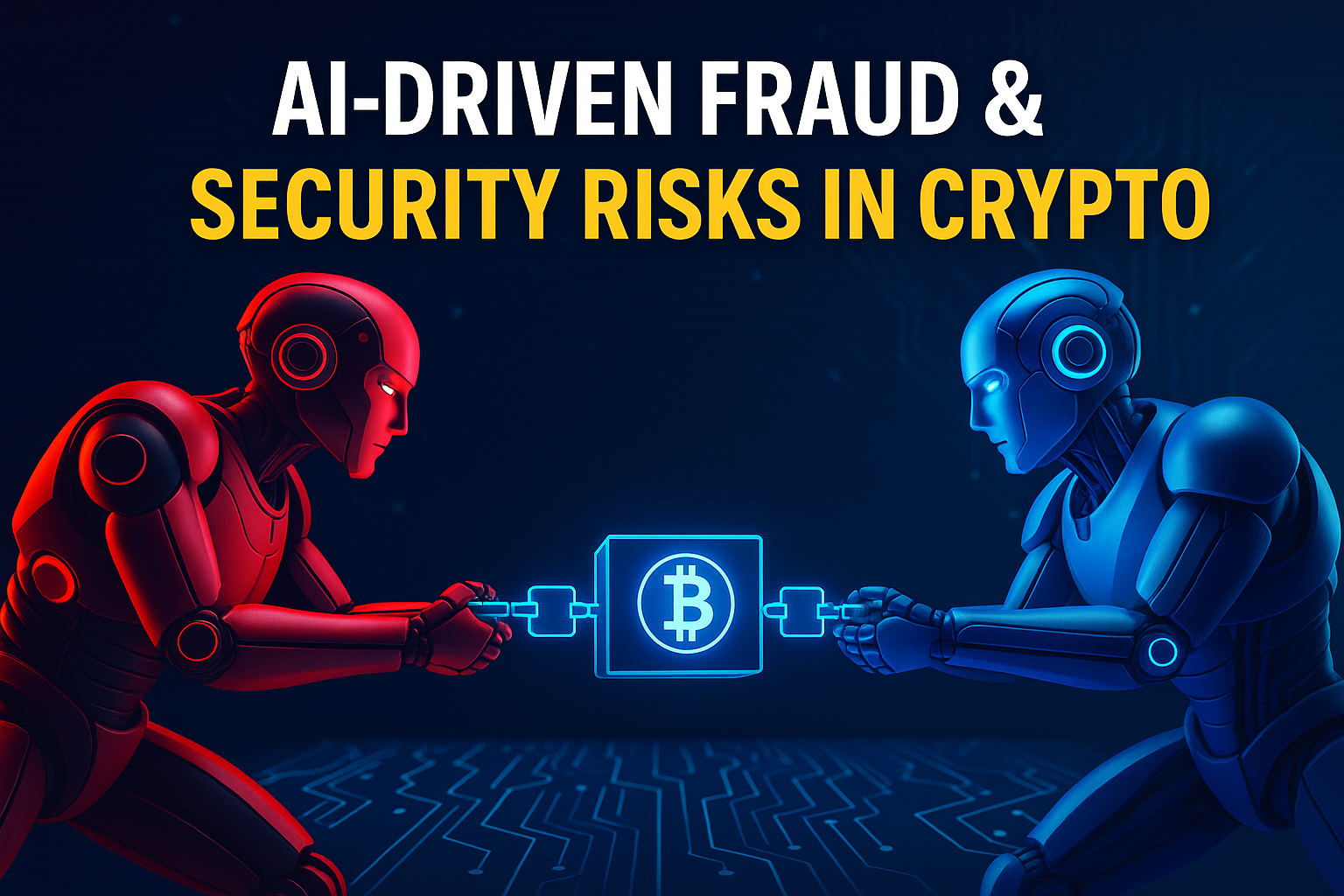
AI is accelerating fraud & zero-day attacks in crypto. From phishing deepfakes to smart-contract bugs—learn the risks, real cases, and how investors & devs can defend themselves.
AI-Driven Fraud & Security Risks in Crypto: Emerging Threats and How to Stay Safe
Meta Title
AI-Driven Fraud & Security Risks in Crypto: Zero-Day Threats & Protection
Meta Description
AI-fueled crypto scams and zero-day attacks are rising. From deepfake phishing to smart contract exploits—here’s what investors and developers must know to stay safe.
Keywords
AI crypto fraud, AI-driven scams, zero-day AI attacks, crypto security, smart contract vulnerabilities, deepfake phishing crypto, DeFi risks, crypto investor protection
Introduction: Innovation’s Dark Twin
Artificial Intelligence has become the most powerful ally of blockchain. It powers smarter trading bots, portfolio tools, and on-chain analytics. But AI is also arming bad actors.
Across the crypto world, we’re seeing a surge in AI-powered scams, from deepfake impersonations to automated zero-day exploits. These attacks scale faster, hit harder, and leave fewer traces. In a market where transactions are irreversible, this is not just a risk — it’s an epidemic.
How AI Is Fueling Crypto Fraud
- Deepfake Phishing Attacks
AI-generated voices and videos can mimic exchange executives, project founders, or even friends. Scammers use these deepfakes to trick users into transferring funds or signing malicious smart contracts. - Zero-Day Smart Contract Exploits
AI-powered code analyzers are finding vulnerabilities in DeFi protocols faster than human auditors. Once a flaw is discovered, bots can exploit it in seconds, draining millions before anyone reacts. - Automated Social Engineering
Machine learning scrapes your social media to craft targeted scams. Messages feel personal because they are. - Market Manipulation Bots
AI trading bots can fabricate volume, spoof orders, or launch flash-loan attacks that destabilize token prices. Retail investors get caught in the crossfire.
Why Crypto Is the Perfect Target
- Irreversible Transactions: Once crypto leaves your wallet, it’s gone.
- Global Pseudonymity: Attackers hide behind wallets, VPNs, and shell projects.
- Code Transparency: Open-source smart contracts invite both collaboration and exploitation.
- Fragmented Regulation: No unified global framework means uneven oversight.
- FOMO Culture: Investors rushing into “the next big thing” make easy prey.
Crypto offers both the treasure and the perfect getaway car for AI-driven criminals.
Case Studies: When AI Strikes
- Hong Kong Deepfake Heist (2023): Scammers used an AI-cloned voice of a company executive to steal $25M. While not crypto-specific, it’s a chilling preview of what treasury teams in Web3 could face.
- DeFi Flash Loan Exploits: Automated bots are increasingly behind multi-million-dollar drains, exploiting contract weaknesses in seconds.
- Fake “AI Tokens”: In every AI hype cycle, fraudsters launch worthless tokens branded as “AI-powered,” only to rug-pull after pumping.
The trend is clear: AI is no longer a tool only for defenders. Attackers are innovating faster.
Protecting Crypto Users: A Two-Front Battle
For Investors & Users
- Use hardware wallets and multi-sig approvals for large funds.
- Verify every transfer request, even if the “voice” or “video” seems real.
- Double-check project audits, URLs, and token contracts.
- Test new platforms with small amounts first — don’t go all in.
For Developers & Projects
- Integrate AI-driven anomaly detection for real-time fraud monitoring.
- Perform formal verification on smart contracts, not just surface audits.
- Offer bug bounty programs to catch flaws before criminals do.
- Secure custody with multi-layered, regulated partners.
How AI Can Also Defend Us
The arms race cuts both ways. AI isn’t only the weapon of fraudsters — it’s becoming the shield of innovators:
- Fraud Detection Algorithms: Spot suspicious transaction patterns in real time.
- KYC/AML Screening with AI: Smarter ID checks reduce fake accounts and fraud.
- Contract Scanners: AI tools can flag vulnerabilities before deployment.
- Behavioral Analytics: Detect compromised accounts by tracking unusual activity.
The future is AI vs AI — attackers and defenders locked in a technological duel.
The Road Ahead
Crypto’s adoption curve is steep, and so is the sophistication of threats. As institutional players (like Nasdaq) move into tokenization and DeFi continues to grow, AI-driven fraud will scale with the market itself.
The way forward isn’t fear — it’s preparedness. Developers must build with security first. Investors must treat safety habits like hygiene. Regulators must create frameworks without stifling innovation.
Final Thought
AI-driven fraud is the dark twin of blockchain innovation. But the story isn’t just about risk — it’s about resilience. The same intelligence that fuels scams can empower defense.
In crypto, the ultimate asset isn’t Bitcoin or Ethereum. It’s trust. Protecting it in the age of AI will define who wins the future.
Frequently Asked Questions (FAQ) on AI-Driven Crypto Fraud
Q1: What is AI-driven crypto fraud?
AI-driven fraud refers to scams and attacks in crypto that use artificial intelligence. Examples include deepfake impersonations, AI-generated phishing, and bots that exploit smart contract vulnerabilities.
Q2: How are deepfakes used in crypto scams?
Attackers clone voices or faces of trusted figures (like exchange executives or project founders) to trick users into sending funds or signing malicious contracts.
Q3: What are zero-day AI attacks in DeFi?
A zero-day attack happens when hackers use AI tools to discover and exploit new vulnerabilities in smart contracts before developers patch them. These can drain millions within seconds.
Q4: Why is crypto especially vulnerable to AI-powered scams?
Because transactions are irreversible, identities are often anonymous, regulation is fragmented, and hype culture drives impulsive decisions — all of which create the perfect conditions for fraud.
Q5: Can AI also protect crypto users?
Yes. AI is being used for fraud detection, anomaly monitoring, automated smart contract scanning, and advanced KYC/AML screening to block suspicious accounts. It’s an arms race between attacker AI and defender AI.
Q6: How can investors protect themselves?
- Use hardware or multi-sig wallets.
- Verify all fund requests, even if voices or videos seem real.
- Start small with new platforms.
- Stick to projects with independent audits and transparent security practices.
Q7: What’s the future of AI and crypto security?
Expect AI to become embedded in both regulation and defense — from automated auditing to decentralized ID systems. But vigilance and strong habits from investors will remain just as critical.